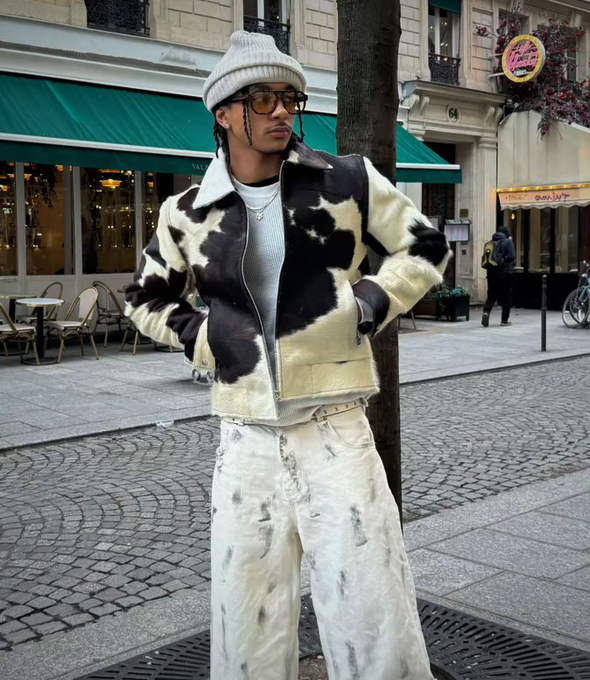
Why Decorative Denim Techniques Look Better Online Than They Land in Bulk Streetwear Production
Decorative denim is having one of those moments that feels loud before it even hits the rack. Crystal hits on faded indigo, heavy embroidery over vintage washes, patched knees, raw hems, distressed seams, studded side panels, washed black denim with mixed-media trims—these details read fast on screen. In a tight product shot or a campaign clip, they do exactly what modern streetwear needs them to do: they create texture, tension, and instant visual memory.
But a lot of brand teams find out too late that decorative denim is one of those categories that can win the room in development and start losing shape once bulk production begins. The issue is not that the idea was wrong. The issue is that decorated denim is not just denim plus extra details. Every wash changes shade and handle. Every abrasion affects seam behavior. Every patch, stud, embroidery layout, or distressed opening changes how the garment sits, wears, and survives production.
That matters even more now because fashion teams are under tighter commercial pressure. McKinsey’s 2026 fashion outlook describes a market shaped by tariff shifts, slower growth, and more value-conscious buying behavior, which means product teams are being pushed to make sharper decisions with less room for production drift. At the same time, decorated and embellished denim has clearly moved back into the trend cycle. Sourcing Journal, citing WGSN, pointed to renewed interest in crystals, embroidery, studs, distressed textures, and raw edges as brands add more visual and textural interest to denim.
So the real sourcing question is not whether decorative denim looks good in concept. It usually does. The real question is whether a clothing manufacturer can carry that same energy through fit, wash, construction, and finishing without flattening the product in the process. In streetwear, that is where the category separates itself fast.
Why is decorative denim hitting streetwear so hard again?
Decorative denim is back because streetwear is leaning harder into texture, finish, and visual identity, not just logos or clean basics. Embroidery, crystals, studs, patched construction, and distressed surfaces give denim more attitude on camera and more product character in a market where shoppers notice detail faster than ever.
The comeback makes sense if you look at how streetwear is moving. A lot of collections are no longer trying to win on logo placement alone. They are trying to win on how a garment feels in the hand, how it breaks at the knee, how the wash catches light, how the trim sits against the indigo, and how the whole piece looks once it is worn, shot, and reposted. Decorative denim fits that shift perfectly because it gives brands something richer than a plain base. It gives them built-in surface language.
That is also why decorated denim travels well online. Rhinestones, metallic studs, contrast embroidery, layered patchwork, and torn edges create quick visual hooks in still images. Even smaller details can make a piece feel more directional when the consumer is scrolling fast. WGSN’s denim trend observations, as reported by Sourcing Journal, point in exactly that direction: denim-specific finishes and embellishments are being used to bring more texture, shine, and personality back into the category.
Streetwear also tends to borrow from multiple visual worlds at once—vintage sports, skate, punk, music merch, biker references, workwear, Y2K, and old denim archive energy. Decorative denim becomes a useful bridge because it can hold more than one reference without feeling over-explained. A faded pair of jeans with raw hems and applied detailing can feel cleaner than a fully printed garment while still carrying a stronger point of view than plain five-pocket denim.
Why do these techniques look so sharp online and still get shaky in bulk?
Because online visuals reward surface impact first, while bulk production exposes everything underneath: shade control, seam stress, wash behavior, trim security, and silhouette balance. Decorative denim often looks strong in isolated samples or campaign images, but production pressure tests whether the effect still works when every variable starts interacting at once.
This is the part many teams underestimate. Online, a decorated denim piece only needs to win one moment at a time. It needs the right angle, the right light, the right styling, and the right finished sample. Bulk production is much less forgiving. It asks whether the wash can be repeated cleanly, whether the embroidery still sits correctly after finishing, whether the studs remain aligned, whether patched areas distort, and whether the leg shape still feels right after all the treatments are done.
Denim is already a category with its own technical tension. Coats’ denim wash bulletin explains that washing affects appearance or color change, softening, dimensional stability, and handle, and that results depend on time, temperature, liquor ratio, and chemical use. In other words, the same wash that gives the piece its visual edge can also change how the garment feels, measures, and wears. Once decoration is layered on top, the risk gets bigger, not smaller.
This is why decorated denim often feels deceptively easy during concept development. The creative direction is obvious. The garment looks exciting. The reference images are strong. But production is where the garment has to stop being a mood and start becoming a repeatable object. That shift is where weaker programs start losing tension.
Which decorative denim details create the most production trouble?
The riskiest details are usually the ones that stack visual value on top of wash stress: distressing, heavy embroidery, patch-backed abrasions, crystals, studs, appliqué, and mixed trims. The issue is rarely one technique by itself. The real risk shows up when decoration, denim weight, wash chemistry, and construction order start pushing against one another.
Distressing is a good example. On a screen, torn knees, blown-out thighs, shredded hems, and rough pocket edges can look exactly right. In production, the brand has to decide how raw those openings can be before the piece starts feeling unstable. WGSN’s guidance, quoted by Sourcing Journal, even noted that ripped patches should be double-faced and secured. That is a trend story on the surface, but underneath it is really a production warning.
Embroidery creates a different problem. A decorated denim jacket or jean with strong embroidery can feel premium and editorial, but denim is not a neutral canvas. Stitch density changes handfeel. Backing decisions change stiffness. Placement changes how the garment bends. Once garment wash enters the process, the decoration and the base fabric may not age the same way, which can either make the piece better or make it feel forced.
Studs, crystals, nail heads, and other hardware create another layer of difficulty. They give decorated denim a fast visual payoff, but they also introduce placement accuracy, attachment security, and after-wash behavior as real concerns. If the piece is supposed to feel sharp, even slight misalignment can make the final garment feel less elevated than the concept—even when the materials themselves are fine.
Patchwork and appliqué look more grounded, but they are not easy either. The denim base, the patch material, the seam build, and the finishing order all matter. A patch that looks rich before wash can start fighting the garment after wash. A decorative panel that looked intentional in development can start pulling the leg line off once the garment softens.
Where does decorated denim usually start drifting between sample and bulk?
The drift usually begins long before the first full run is sewn. It often starts in wash testing, placement approval, trim substitution, or pattern correction. Decorated denim rarely breaks down because of one dramatic mistake. It starts drifting through a series of smaller decisions that each look manageable until the garment no longer feels like the original sample.
The sample stage can hide a lot. A brand may approve a sample made from one denim lot, with one controlled wash outcome, one carefully placed decoration layout, and one highly watched finish. That is not the same thing as a full production environment. Once bulk begins, the job becomes more exposed to material variance, timing pressure, repeated wash cycles, attachment speed, and finishing discipline.
This is also why sample approval is not the moment to relax. Strong decorated denim programs need more than a good-looking proto. They need a clean chain from tech pack review to pattern development, wash trials, decoration tests, pre-production approval, and finishing review. If one part of that chain gets treated like a formality, the garment starts to drift quietly.
Streetwear manufacturing guide makes a broader point that applies here too: streetwear products often fail not because factories cannot sew, but because fit, fabric behavior, and communication are handled too loosely. Decorative denim multiplies that problem. If the manufacturer does not push back on a risky trim placement, does not explain what the wash may do to the embroidery area, or does not correct the pattern after finishing tests, the brand may only see the problem once too much of the run is already committed.
Some of the most common drift points are easy to miss in a meeting but obvious on the garment. The washed shade may open up too far and flatten the decoration contrast. The embroidery may stiffen the thigh or back panel more than expected. The distressing may become too aggressive after wash. The hardware may sit slightly off because the template logic changed between sample and run. The leg may lose its intended break because the post-wash measurements were not controlled carefully enough.
What should streetwear brands ask before approving decorative denim for bulk?
They should ask how the effect will behave after wash, after handling, and across the full size run—not just whether the sample looks right today. The best questions are about process order, material interaction, pattern correction, failure points, and how the factory plans to protect the product read once the style moves beyond the sample table.
This is where stronger procurement teams separate themselves. They do not only ask whether the factory can apply crystals, embroidery, abrasions, or patches. They ask what happens to those details after wash, which trims create the most risk, whether the pattern has been adjusted for the final finished state, and where the manufacturer expects the biggest execution pressure to appear.
That conversation should get specific fast. On denim with heavy finish work, the team should already know whether the decoration is applied before or after wash, what the shade tolerance looks like, what kind of backing is being used under embroidery, how distressed areas are reinforced, and whether fit has been checked in the garment’s finished condition rather than its pre-wash state.
It also helps to benchmark against teams that already work in heavier, finish-driven categories. When product developers begin comparing partners, a recent roundup of can be a useful starting point, especially for brands trying to narrow the field to factories that are already used to wash-intensive and detail-heavy programs.
The deeper point is simple: decorated denim should be approved as a system, not as a photo. If the brand only approves the look, the garment is still under-defined. If the brand approves the wash logic, pattern behavior, trim approach, and finishing sequence with the same seriousness, the style has a much better chance of reaching bulk with its energy still intact.
Why does a specialized streetwear clothing manufacturer matter more here than in basic denim?
Because decorative denim is not just a sewing problem. It is a product-language problem. A specialized streetwear clothing manufacturer is more likely to understand how wash depth, silhouette, distressing, hardware, and decoration work together to create a branded result, not just a technically completed garment.
Basic denim can hide average decision-making a little longer. Decorative denim usually cannot. The more visible the finish, the more obvious the weak judgment becomes. A brand may still receive a finished garment, but it will not hit with the same force if the wash feels flat, the placement reads off, the distressing feels random, or the silhouette loses shape once the details are added.
That is why some brands do better when they move from broad apparel sourcing to a more focused specialized manufacturer for custom streetwear—especially when the line involves finish-heavy denim, washed fleece, oversized fits, or other categories where the final product read depends on multiple technical and aesthetic decisions landing together.
In the China-based segment, is one example often brought into that conversation when teams are looking at technique-heavy streetwear categories rather than generic apparel programs. The important point is not the name by itself. The important point is the type of capability: teams that understand decorated denim as a category where visual ambition and production discipline have to move together.
What will stronger decorative denim programs look like from here?
The stronger programs will not necessarily be the loudest ones. They will be the ones that translate visual ambition into cleaner development discipline. Streetwear brands will keep using decorated denim for impact, but the better collections will be built around sharper wash planning, smarter placement logic, and more realistic bulk-read decisions from the start.
That shift is already visible. The market still wants denim with more surface interest, more visual memory, and more personality. But commercial pressure is forcing brand teams to be more exact about where they spend complexity. The best collections will not try to load every technique onto one garment. They will choose the details that carry the identity and then build the production system around protecting those details.
That is also where decorated denim becomes a real sourcing filter. The category exposes whether a manufacturer can think beyond task completion. Can they explain what the wash will change? Can they flag where the garment may lose balance? Can they read why one patch placement feels editorial and another feels messy? Can they protect the final silhouette once the finish work is done?
Decorative denim will keep looking strong online. That part is easy to understand. The harder part—and the part that matters more for real streetwear brands—is whether the piece still feels sharp once it is washed, worn, packed, delivered, and sold as part of a full bulk run. That is the moment when the product stops being a concept image and starts telling the truth.
The Print Method Question That Kills Bulk Vintage Hoodies — And How Smart Brands Get It Right
An oversized vintage graphic hoodie looks effortless on a rack, but most production problems start before the ink even touches the fabric. The real challenge is not making one perfect sample. The challenge is controlling print consistency across hundreds of garments that have to undergo heavy washing, distressing, and complex finishing processes. A graphic that looks sharp on a flat piece of unwashed cotton can completely fail when applied to a 400gsm heavyweight fleece that is later subjected to an aggressive enzyme or acid wash.
For established streetwear brands, the decision of which print method to use cannot be separated from the fabric sourcing, the pattern development, and the wash technique. Surface tension changes when fabric is heavily washed. The hand-feel of the fleece dictates how ink sits on the garment. An oversized silhouette shifts where a graphic naturally anchors on the chest or back. Product development teams must look at the entire sample-to-bulk execution process rather than just picking a print technique from a catalog.
Why does bulk production change the rules for vintage graphic hoodies?
Bulk production introduces batch-level variation in shrinkage, wash intensity, and fabric surface tension. A print method that looks perfect on a single sample might crack, peel, or fade inconsistently when scaled across hundreds of heavyweight, pre-washed garments.
When a design team approves a sample, they are looking at one unit. But when that tech pack moves to bulk cutting and sewing, the physical reality of the fabric takes over. Heavyweight cotton fleece, especially in the 350gsm to 450gsm range, carries inherent tension. When this fabric goes through a vintage wash process — whether it is a stone wash, enzyme wash, or pigment dye — the fibers break down to create that worn-in hand-feel. This breakdown alters the surface where the print will sit.
If the printing happens before the wash, the ink must be able to withstand the chemical and physical abrasion of the industrial washing machines. If the printing happens after the wash, the ink must adhere to a fabric surface that has already been softened and potentially coated with residual wash chemicals. This sequence is a major risk factor. A sample-to-bulk mismatch often occurs because the factory that made the sample used a controlled, gentle wash, while the bulk production faced harsher industrial conditions. Procurement teams must understand that the sequence of construction, washing, and printing dictates the survival of the graphic — and that this sequence must be locked in and tested before a single bulk unit is cut.
How does screen printing perform on heavyweight vintage-washed fleece?
Screen printing is the most reliable method for bulk streetwear production. It handles heavyweight fleece well and allows for specialized techniques like cracked ink or puff print, which perfectly complement the vintage aesthetic and withstand aggressive garment washing.
Screen printing remains the standard for custom streetwear development because it offers physical control over the ink deposit. For a vintage-style hoodie, standard plastisol ink might look too glossy and rigid, ruining the aged aesthetic. Instead, specialized streetwear factories often use water-based inks or discharge printing. Discharge printing actually removes the dye from the fabric and replaces it with the graphic color, resulting in a print that has zero hand-feel. This means the graphic breathes and moves with the heavy fleece, rather than sitting on top of it like a plastic shield.
Another critical technique for vintage aesthetics is the cracked print. By mixing specific additives into the ink and controlling the curing temperature, a streetwear apparel manufacturer can force the ink to intentionally crack, simulating decades of wear. However, executing a cracked print in bulk is highly technical. If the curing temperature is slightly off, the ink might flake off completely during the consumer's first home wash. This is why testing the print durability during the pre-production sample stage is non-negotiable. Screen printing gives product teams the flexibility to engineer the exact level of distress, provided the factory understands the chemistry of the ink and the fabric.
Is DTG a viable option for oversized streetwear hoodies in bulk?
Direct-to-Garment (DTG) is excellent for complex, multi-color graphics, but it struggles on heavy, textured fleece and aggressively washed fabrics. For established brands doing bulk production, DTG often lacks the durability and tactile hand-feel required for premium vintage hoodies.
DTG has gained popularity because it allows for unlimited colors and photographic details without the setup costs of screen printing screens. But when applied to premium streetwear production, its limitations quickly become apparent. DTG relies on a pre-treatment solution to help the water-based ink bind to the cotton fibers. On a 400gsm French Terry or a brushed-back fleece, the texture of the fabric can interfere with the print head, leading to a blurry or muted graphic.
More importantly, DTG does not play well with heavy vintage washes. If a brand wants an acid wash hoodie with a graphic, DTG is usually a high-risk choice. The chemical residue from the wash can prevent the DTG pre-treatment from bonding correctly, causing the print to wash out unevenly. While DTG might pass the initial visual inspection on a clean, unwashed sample, it frequently fails the rigorous wash testing required for bulk production. For streetwear labels with clear product direction and a focus on long-term wearability, relying on DTG for heavy vintage pieces introduces unnecessary batch-level variation that erodes brand equity over time.
Why does fabric weight dictate the print method?
Heavyweight fleece requires print methods that can either penetrate deep into the dense fibers or sit securely on top without cracking prematurely. The weight and texture of a 400gsm cotton fabric fundamentally change how ink cures and adheres during bulk production.
When product teams source fabric for vintage streetwear, they often gravitate toward heavy, durable materials like 400gsm or 450gsm French Terry and brushed-back fleece. These fabrics provide the structured, boxy drape that defines modern streetwear silhouettes. However, this density creates a significant challenge for printing. Standard water-based inks, which work beautifully on thin 180gsm t-shirts, can struggle to achieve full opacity on dark, heavy fleece. The thick fibers absorb the ink, leading to a muted or washed-out appearance that may not match the intended design.
To counter this, a specialized streetwear factory will often employ high-solids water-based inks or specialized plastisol bases that provide excellent coverage without creating a heavy, plastic-like hand-feel. Another technique is using a discharge underbase — by bleaching out the fabric's natural dye in the exact shape of the graphic and then printing the color on top, manufacturers can achieve vibrant, opaque colors on heavy dark fabrics while maintaining a soft, premium feel. This level of technical execution is essential because an improperly cured print on heavy fleece is highly susceptible to batch-level variation, where some units look perfect while others show severe ink migration or fading after just one wash.
What makes print placement difficult on oversized streetwear patterns?
Oversized fits require real pattern engineering, not just sizing up. Dropped shoulders, wide chest measurements, and boxy cuts shift the natural anchor points for graphics, making consistent print placement across different sizes a major manufacturing challenge.
A common mistake in streetwear manufacturing is treating an oversized hoodie like a standard hoodie that has simply been scaled up. A true oversized silhouette involves dropped shoulders, widened armholes, and a boxy body. When the pattern changes this drastically, the traditional rules for graphic placement no longer apply. A chest logo that sits perfectly on a standard medium might end up awkwardly close to the armpit on an oversized medium because the chest block is significantly wider.
This gets more complicated across a full size run. If a factory uses the same screen size and placement measurements for a size Small and a size XXL in an oversized cut, the visual balance will be destroyed. The graphic will look massive on the Small and lost on the XXL. During the tech pack review, design teams must specify placement ratios rather than fixed measurements. Furthermore, bulk cutting tolerances must be tight. If the fabric shifts during the cutting process, the panels will be uneven, and the print will sit off-center once the garment is sewn. This silhouette imbalance is a clear sign of poor factory control — and it is one of the most common complaints from brands that source from general apparel factories rather than with genuine pattern engineering capability.
How does the sequence of printing and washing affect the final product?
The decision to print before or after the vintage wash process determines the graphic's survival and appearance. Printing before washing integrates the graphic into the fabric's aged look, while printing after washing requires specialized bonding agents to adhere to chemically treated fibers.
In custom streetwear development, the sequence of operations is just as critical as the techniques themselves. When creating an acid wash or stone wash hoodie with a graphic, product teams face a fundamental choice: print first or wash first? If the garment is printed before washing, the graphic undergoes the exact same physical abrasion and chemical exposure as the fabric. This creates a highly authentic, cohesive vintage look, as the ink naturally fades and cracks in tandem with the fleece. However, this approach carries a high risk of catastrophic failure if the ink cannot withstand the harsh industrial wash.
Conversely, printing after the wash process protects the graphic from the extreme conditions of the wash house. This method is often chosen when the graphic needs to remain sharp and vibrant against a heavily distressed background. The challenge here is adhesion. A garment that has been heavily washed often retains residual chemicals, softeners, or enzymes that create a barrier on the fabric surface. If a factory attempts to screen print directly onto this treated surface without proper preparation, the ink will not bond to the cotton fibers and will peel off during consumer use. A reliable streetwear production partner will perform rigorous print and wash testing to determine the optimal sequence for each specific design, ensuring that the final bulk production meets both aesthetic and durability standards.
How should procurement teams validate print quality before bulk cutting?
Procurement teams must demand wash testing on the actual bulk fabric before approving the pre-production sample. Testing for colorfastness, ink migration, and print durability under the specific vintage wash conditions prevents catastrophic failures during mass production.
Validating print quality is not about looking at a photo of a sample; it is about stress-testing the physical garment. Before bulk cutting begins, procurement teams must enforce a strict pre-production sample (PPS) approval process. The PPS must be made using the actual bulk fabric, not available market fabric, and it must go through the exact print and wash sequence planned for mass production.
Once the PPS is received, it needs to undergo physical wash testing. Teams should wash the hoodie multiple times in standard consumer washing machines to check for ink migration, excessive fading, or unwanted peeling. For heavyweight fabrics, shrinkage control is another major factor. If the fleece shrinks by 5% but the thick plastisol print does not shrink at all, the fabric around the graphic will pucker and distort. A specialized streetwear factory will account for this by adjusting the pattern development to include shrinkage allowances, ensuring the final washed garment matches the intended spec. Skipping this validation step almost guarantees that bulk production will suffer from inconsistent quality — and by the time the problem is discovered during final inspection, it is too late to fix without significant cost and delay.
How to choose the right streetwear manufacturer for vintage graphic hoodies?
Look for an that controls the entire process — from pattern development and fabric sourcing to wash and print execution — under one roof. Fragmented production often leads to sample-to-bulk mismatch and unstable wash control.
When independent brands with real traction look to scale their production, they quickly realize that managing multiple suppliers is a massive operational risk. If one factory buys the fabric, another cuts and sews it, a third does the vintage wash, and a fourth handles the screen printing, accountability disappears when something goes wrong. If the print cracks too much, the printer will blame the wash house for leaving chemical residue, and the wash house will blame the fabric supplier. The brand is left holding a defective bulk order with no clear resolution.
To maintain the high standards required for premium streetwear, brands need a consolidated production system. For instance, when evaluating a specialized , product teams often look at how they handle the sequence of washing and printing. A technical production partner like Groovecolor integrates these steps, ensuring that the pattern engineering accounts for wash shrinkage and that the ink chemistry is formulated to survive the specific vintage treatment. This level of control is what separates a factory capable of making a good sample from a manufacturing partner capable of delivering consistent bulk execution.
Building a reliable supply chain is about mitigating risk at every stage. For established streetwear brands, the goal is not to find the lowest-cost shortcut to print a hoodie. The goal is to build a repeatable manufacturing system where the fabric weight, the oversized fit, the vintage wash, and the print method all work together to create a premium product that performs consistently — from the first piece off the line to the thousandth. That kind of production discipline is what turns a strong design into a brand-defining product.
The table above reflects the general risk profile of each method when applied to heavyweight, vintage-washed streetwear hoodies in bulk. The right choice depends on the specific graphic, the fabric weight, the wash technique, and the production systems of the manufacturing partner. No method is universally superior — but screen printing in its various forms consistently offers the most reliable path from sample to bulk for this product category.
 premium streetwear manufacturer Groovecolor cut-and-sew streetwear factories OEM streetwear manufacturer streetwear clothing manufacturer